
The MIGHTY YOU EU partnership held its latest online meeting on 28 May 2026, bringing together representatives from all five partner organisations to review progress and plan the next steps in the project.
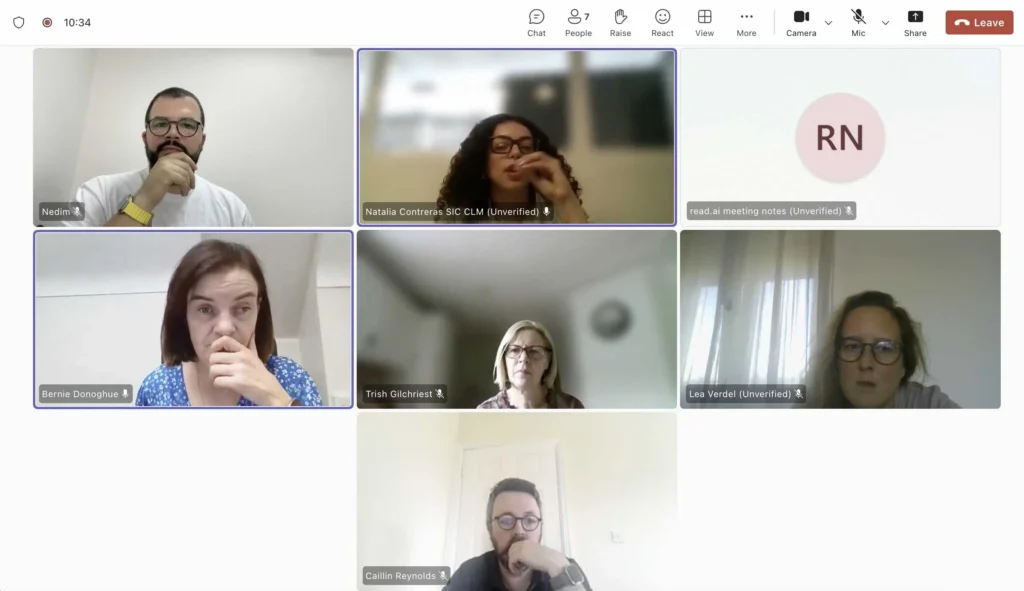
The meeting followed the completion of the national research phase under Work Package 2, in which all partners conducted interviews and nominal group sessions with youth educators and young people across Ireland, Germany, Austria, Croatia and Spain.
The focus of the May meeting was to review the cross-country analysis prepared by Social Innovation Cluster CLM (Spain), who synthesised findings from all national reports to identify common themes, challenges and promising practices in countering online xenophobia.
Partners discussed the key findings emerging from the research, which will form the evidence base for the Digital Inclusion Toolkit – the main output of Work Package 2. The cross-analysis highlighted shared patterns across partner countries regarding the types of xenophobic content young people encounter online, the gaps in educator capacity to address these issues, and the digital tools and methods already being used in youth work settings.
The meeting also addressed practical matters including project monitoring, quality reporting, and preparations for the next phase of toolkit development. Partners confirmed their respective contributions to the drafting process, with CLM leading the coordination of the toolkit and all partners contributing content based on their national contexts.
The next partner meeting is scheduled for June, ahead of the toolkit completion deadline. The project remains on track, with the Digital Inclusion Toolkit expected to be finalised and published later this summer.
Funded by the European Union. Views and opinions expressed are however those of the author(s) only and do not necessarily reflect those of the European Union or the European Education and Culture Executive Agency (EACEA). Neither the European Union nor EACEA can be held responsible for them.


Funded by the European Union. Views and opinions expressed are however those of the author(s) only and do not necessarily reflect those of the European Union or the European Education and Culture Executive Agency (EACEA). Neither the European Union nor EACEA can be held responsible for them.